

Dead Tree Removal: Why a Dead Tree Is More Dangerous Than It Looks
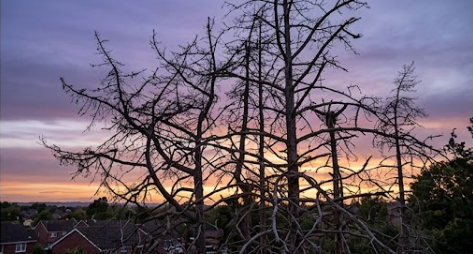
A dead tree standing in the garden doesn’t always look like a problem. No leaves, maybe some bare branches, still upright, still in one piece. It’s easy to leave it. People do, sometimes for years, right up until it comes down on something it shouldn’t. Dead tree removal isn’t something to keep pushing back. A standing dead tree is failing in ways you can’t see from the ground, and it gets less predictable the longer it stands.
Why Dead Trees Are Actually More Dangerous Than Dying Ones
A tree that’s declining usually gives you signals. Leaf loss, sections of the canopy going bare, bark separating. There’s normally a window to do something about it. A dead tree has already gone past that. The wood is drying out, fungal decay is moving in, and branches that held through last winter’s storms might not make it through a moderate gust this year.
What people don’t always account for is the root system. It’s failing too, quietly, below ground. Which means at some point the risk stops being a falling branch and becomes a falling tree. The whole thing.
And here’s the part that catches people out: none of this shows on the outside. The trunk can look perfectly solid while the inside has been hollowing out for months. A dead tree isn’t giving you any indication of how far gone it really is, which is exactly why dead tree removal tends to be more urgent than it looks.
How to Actually Tell If a Tree Is Dead
Start with the time of year. A deciduous tree with no leaves in January is dormant. The same tree with no leaves in June is a different matter.
Scratch back a small section of bark on a branch. Green or white tissue underneath means life. Dry and brown means that section is dead. Check a few branches across the tree, not just one.
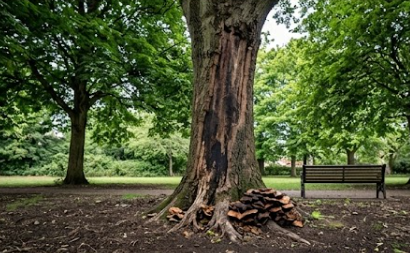
If there’s fungal growth on the bark or around the base, take it seriously. Bracket fungi on the outside usually means the wood inside has been rotting for a while already.
Bark peeling away in sections with nothing active underneath is another sign. Living bark stays attached because the tissue beneath it is doing something. When it’s not, the bark goes.
Try flexing a small branch. Dead wood snaps cleanly. Living wood bends first. That’s a quick and fairly reliable indicator of whether a section has dried out.
And look at the base of the tree. Soil lifting around the roots, fungal growth at ground level, a lean that’s developed recently. Any of those suggest the root system is already compromised, which changes the urgency.
If you’ve done all of that and still aren’t sure, get an arborist out. Dead tree removal planned in advance is a manageable job. The same job after the tree has partially come down is considerably less so.
What Actually Happens When You Leave a Dead Tree Standing
Falling branches are the obvious ones. Dead wood is brittle and unpredictable, and it can come down in conditions that a healthy tree would sail through. Over a path, a car, a child’s play area, a neighbour’s garden. It’s not a question of whether, just when.
Full tree failure is the quieter risk. Root decay reaches a tipping point that gives very little warning, and when a large dead tree falls it doesn’t fall where you’d expect. Onto a building. A wall. The property next door. That’s not a situation that ends cheaply.
Dead trees also attract bark beetles and other insects that, once they’ve run through the dead wood, move on to the healthy trees nearby. Fungal infections spread through the soil and root systems. Get that dead tree removal now before it ends up spreading and affecting other trees.
There’s also a liability angle. If a tree on your property falls and causes damage, and it was visibly dead beforehand, the question of whether you knew about the risk becomes relevant. Organising dead tree removal before something happens is a simpler position to be in than after.
TPOs and Dead Trees
People often think a Tree Preservation Order means they can’t touch a dead tree. That’s not quite how it works, but it’s not as simple as just getting the chainsaw out either.
Most local authorities will allow dead tree removal on a protected tree, but you need to notify them first and have evidence the tree is genuinely dead before work starts. Doing it without going through that process is still a legal offence. At Treesaw we check for TPOs before every job and deal with the notification side of things. If you want to understand the rules before speaking to anyone, the GOV.UK guidance on Tree Preservation Orders is a decent starting point.

Why It’s Not a DIY Job
Dead wood doesn’t behave the way living wood does when you cut into it. The tension shifts as sections come off, and without the experience to read that, a job that looks straightforward can go wrong fast. Put that at height, near a building, with limited space, and it’s a different proposition entirely from cutting back overgrown shrubs.
Our tree surgery service handles dead tree removal across Leeds, Bradford, Harrogate, and Wakefield. Dead tree removal at height, near structures, with limited access is a different job to cutting back garden shrubs, and our team is qualified and equipped for exactly that. We hold AAAC status, ISO registration across Quality, Environmental, and Health and Safety Management, and are fully insured.
After the Tree Comes Down
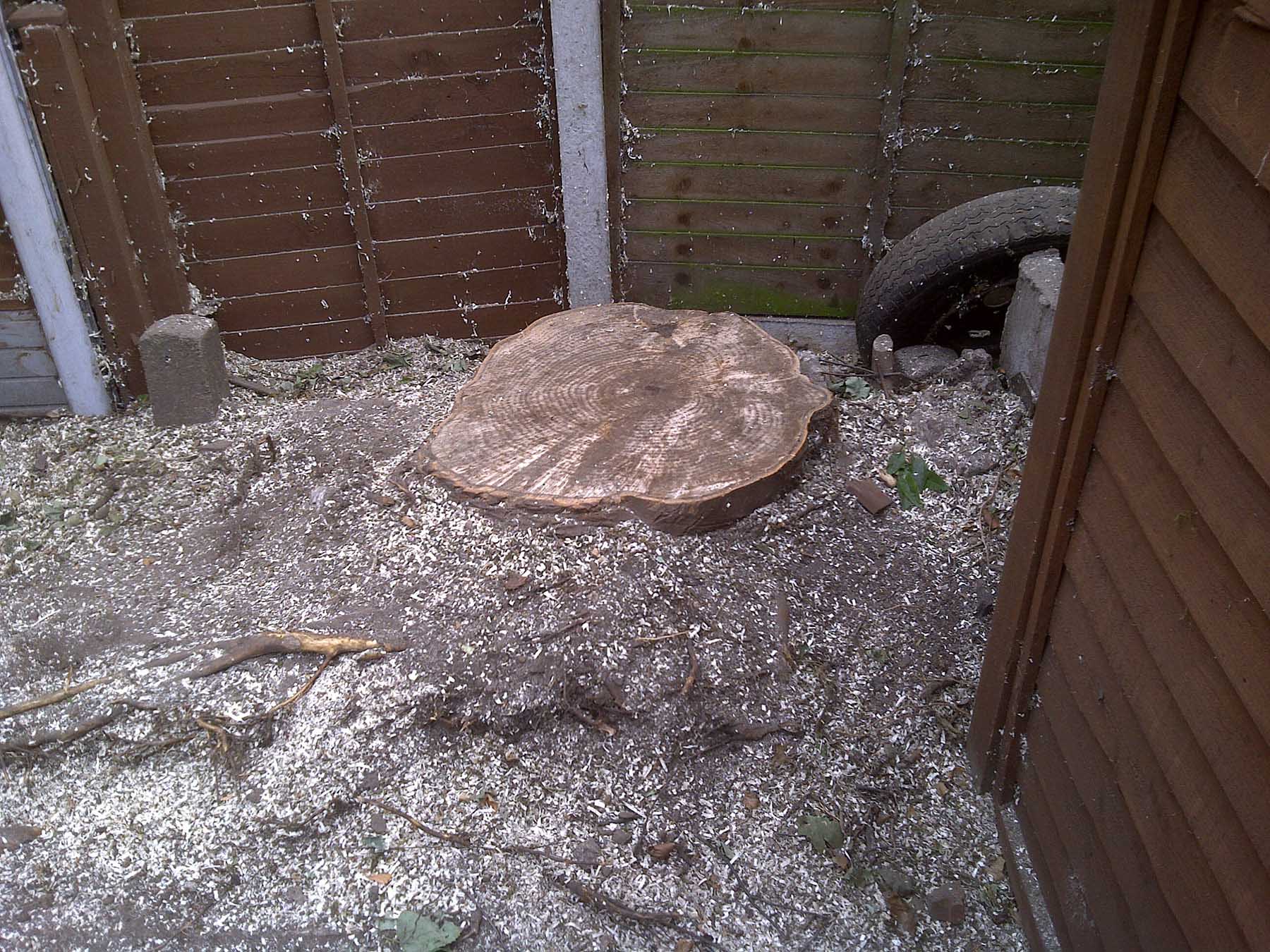
The dead tree removal doesn’t involve the stump as it doesn’t decompose quickly and it doesn’t just blend into the garden. If you’re planning to replant or return the area to lawn, stump grinding is the next step. It breaks down the visible stump and the upper root system, which is usually enough. Our stump removal service handles it as part of a removal or as a standalone job if the stump is all that remains.
Getting a Quote
If there’s a tree you’re not sure about, we offer free estimates and can take a look at the tree as part of that visit. No obligation, just a straight assessment of what you’re dealing with.
0113 239 1271 / [email protected] / contact us here
Monday to Saturday, 8am to 6pm. Emergency line: 07754 733124.