

Plum Tree Pruning UK: Why July Is The Month To Get It Done
If you have a plum tree in your garden, there is one rule that matters more than any other. Do not prune it in winter. It sounds odd, because most tree work in this country happens when trees are dormant, and that is exactly why so many plum trees end up in trouble. People apply the winter pruning logic they know from apples and pears, and with plums it backfires badly.
At Treesaw, we look after fruit trees in gardens across Leeds, Harrogate, Wakefield and Bradford, and plums are one of the trees we get called about most often. Usually after something has gone wrong. This guide covers plum tree pruning UK gardeners can actually rely on: when to do it, how to do it, and why the timing matters so much more with plums than with almost any other tree.
And if you are reading this in July, good news. You are in the ideal window right now.
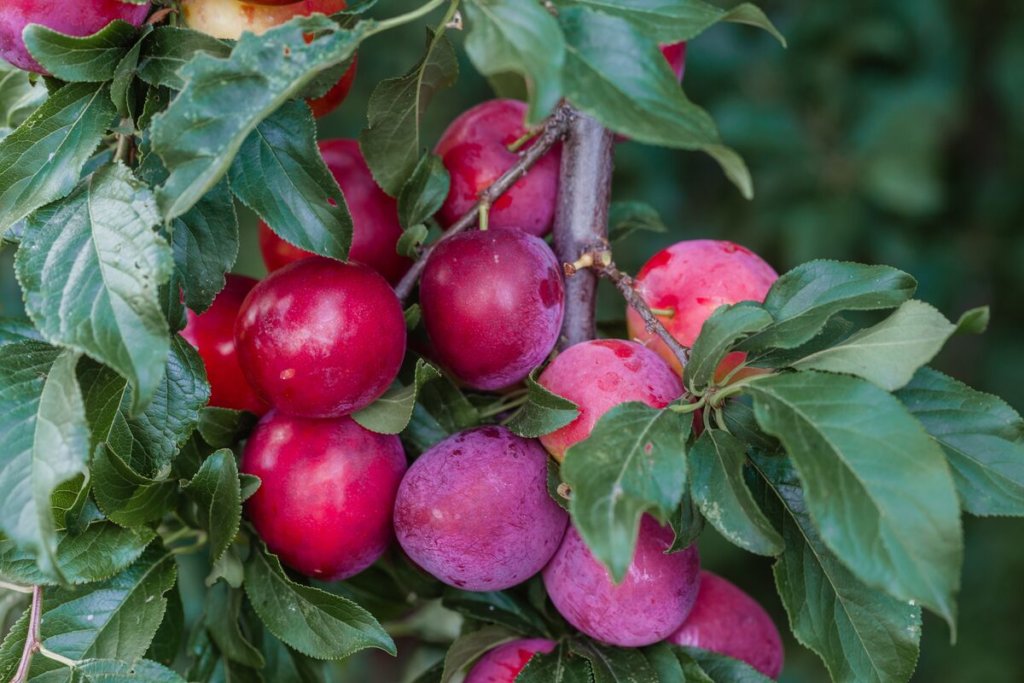
Why Plums Break the Normal Pruning Rules
Plums belong to the Prunus family, along with cherries, damsons, gages, peaches and apricots. And the whole family shares one serious weakness: Silver Leaf Disease.
Silver leaf is a fungal disease, Chondrostereum purpureum if you want the proper name, and it infects trees through fresh wounds. The fungus releases its spores mainly in autumn and winter, when the weather is cool and damp. That is exactly the environment we have in West Yorkshire for a good six months of the year. A pruning cut made in November or February is an open door, sat there in wet air for weeks while the tree is dormant and unable to defend itself.
Once silver leaf takes hold it works through the wood, giving the foliage a silvery sheen before branches start dying back one by one. There is no chemical cure. In bad cases the whole tree is lost.
So the answer is simple enough. Prune when the spores are least active and the tree can heal fastest. That means summer.
When to Prune Plum Trees in the UK
The short version: when to prune plum trees comes down to one season. Mid summer, ideally July, for established trees. Young trees needing formative work can be pruned in early spring, around April, once growth has started. Never prune in winter.
Why July specifically? A few reasons stack up nicely:
The tree is in full active growth, so pruning wounds callous over quickly, often within weeks rather than months. The weather is warmer and drier, so fungal spores are far less active. And by mid July the new season’s shoots have mostly finished extending, so you can see what you are working with and the tree will not respond with a flush of soft regrowth that gets caught by autumn frosts.
The RHS gives the same guidance, early spring or mid summer, and it is advice we follow on every plum, cherry and damson we work on. It is not a preference thing. It is the single biggest factor in whether the tree stays healthy.
We covered a similar timing question for a very different species in our guide to the best time to prune olive trees in the UK. Olives want late spring, plums want mid summer, and the reasoning behind both comes down to the same two things: wound healing speed and disease pressure. Get your head around those and the timing for most trees starts to make sense.
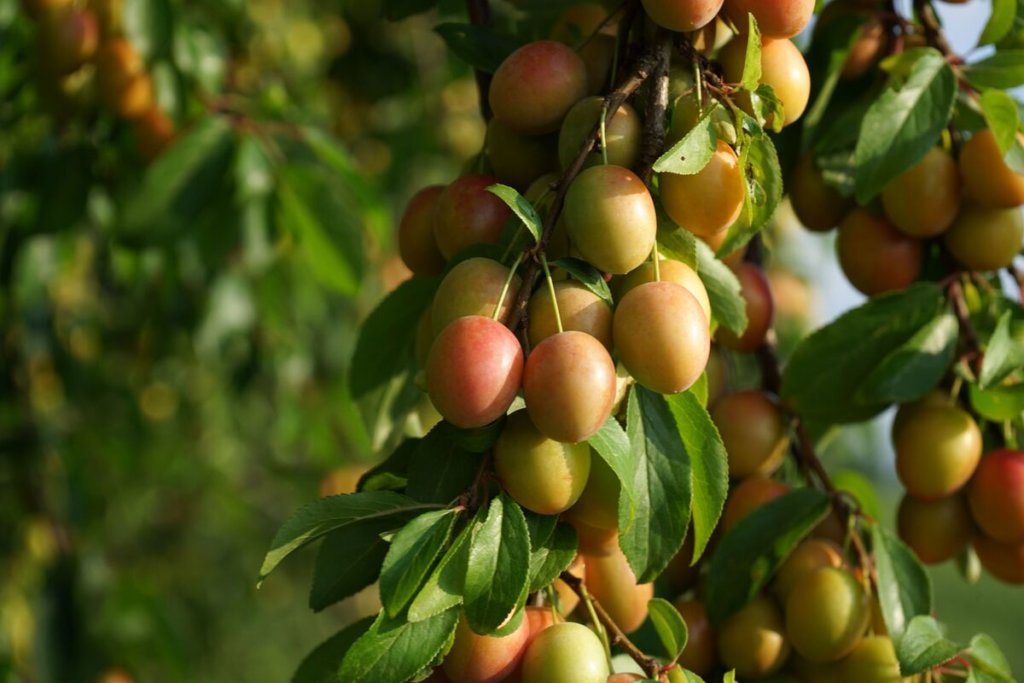
A Month by Month Guide to Plum Tree Pruning UK Gardens Can Follow
November to February: leave it alone
This is the danger zone. Cold, wet, and peak spore season for silver leaf. Even if the tree looks like it needs work, wait. Make a note of dead or crossing branches while the structure is visible and deal with them in summer. The only exception is genuinely hazardous storm damage, which we cover further down.
March to April: formative pruning on young trees
Young plums, in their first three or four years, can be pruned in early spring once the buds have broken and the tree is waking up. This is when you set the shape: an open centred bush is the most common form, with three or four well spaced main branches and a clear stem. Cut to outward facing buds and keep the middle of the tree open. Frost is still possible in Leeds through April, so keep the cuts modest.
May to June: watch and wait
Let the tree get on with flowering, fruit set and shoot growth. This is a good time to thin a heavy crop though. Plums are notorious for overloading themselves, and snapped branches from fruit weight are one of the most common plum problems we attend. Thinning the fruit in early June to leave one plum every 5 to 8 cm saves the branches and gives you bigger fruit.
July to August: the main pruning window
This is it. Mid July is the sweet spot for plum tree pruning UK wide, and for established trees in particular. Remove dead, damaged and diseased wood first, then anything crossing or growing into the centre of the crown. Thin crowded areas to let light and air through. Shorten over long branches to a suitable side shoot. Keep the total removal to no more than about a quarter to a third of the canopy in one year.
Trained forms want summer attention too. Pyramid plums get their branch leaders shortened to around 20 cm in the third week of July, and fan trained trees against walls get their new shoots tied in or cut back now as well.
September to October: last light work only
Very light tidying is still fine in early September, but the window is closing. Growth is slowing, healing is slowing, and spore activity is climbing again. From October onwards, put the tools away until spring.
How to Actually Make the Cuts
Timing gets most of the attention, but technique matters too. A rough cut in July is still worse than a good cut in July.
Use sharp, clean tools. Secateurs for anything up to finger thickness, loppers for a bit more, and a proper pruning saw for larger limbs. Clean the blades between trees, and between cuts if you are removing diseased wood. It sounds fussy but tools are one of the main ways disease travels around a garden.
Cut just outside the branch collar, the slightly raised ring where the branch meets the trunk. Not flush with the trunk and not leaving a long stub. The collar contains the tissue the tree uses to seal the wound, so cutting through it slows healing right down. For heavier branches, use a three cut method: an undercut first, then remove the weight of the branch further out, then a final tidy cut at the collar. This stops the bark tearing down the trunk as the branch falls.
Don’t bother with wound paints on summer cuts. A clean cut made in July heals better on its own. The old advice about sealing every cut has largely been dropped, and on plums the more useful rule is simply fewer, better cuts at the right time of year.
While you are up close, pull off any suckers coming from the base and rub out buds sprouting low on the trunk. Most garden plums are grafted, so those suckers are the rootstock trying to take over, and they will if you let them.
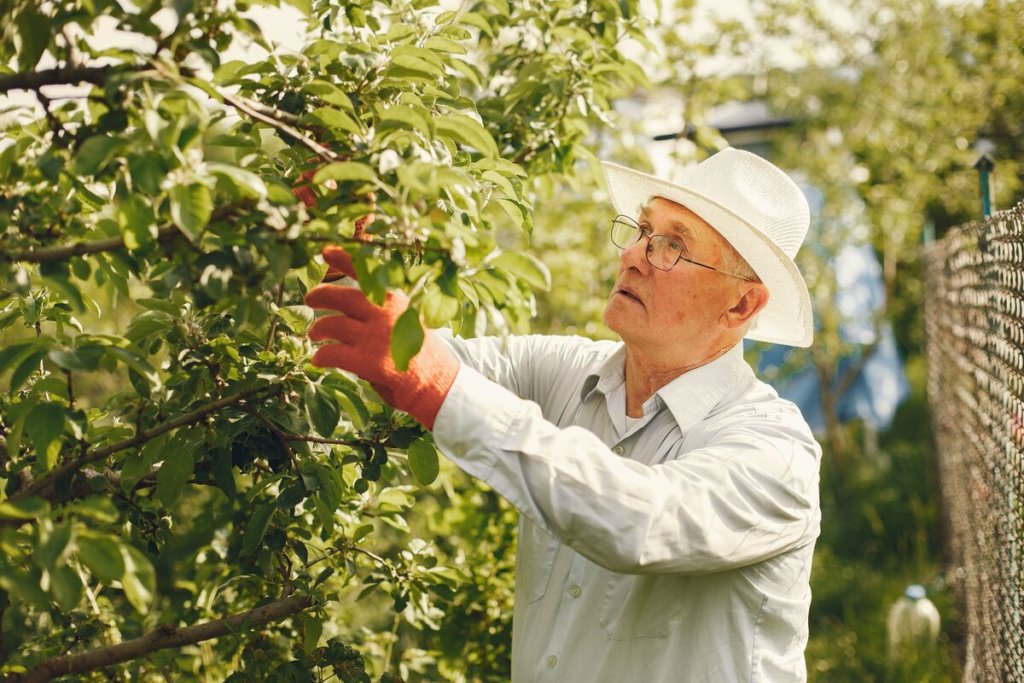
Renovating a Neglected Plum Tree
We see a lot of these. An old plum in the corner of the garden that has not been touched in ten years, thick with crossing branches, cropping heavily one year and barely at all the next.
The temptation is to sort it all out in one go. Don’t. Hard pruning a mature plum in a single season stresses the tree, triggers a forest of vigorous upright shoots called water sprouts, and every large wound is a silver leaf risk. Spread the renovation over two or three summers instead. Year one, take out the dead wood and the worst of the crossing branches. Year two, start opening up the centre. Year three, finish the shaping. Slower, but you end up with a healthy tree rather than a stressed one.
And here is a less known trick for overly vigorous trees: festooning. Instead of cutting young upright branches, tie them down towards horizontal over summer and leave the ties on until spring. Horizontal branches fruit more and grow less, so you calm the tree down without making a single cut. It works well on plums and it is something we use on garden trees more often than you might expect.
Common Mistakes with Plum Tree Pruning UK Homeowners Make
After years of working on fruit trees around Leeds, the same handful of problems come up again and again. Winter pruning is the big one, usually done in good faith in January because that is when the garden gets tidied. Taking too much off in one year comes next, followed closely by never thinning the fruit, which is how most snapped plum branches happen. Ragged cuts from blunt tools, stubs left to rot, and suckers left to grow into a thicket round the base make up the rest.
None of these are hard to avoid once you know about them. But the winter pruning mistake in particular is worth repeating to any neighbour with a plum tree, because it is the one that kills trees.
When You Should Not Wait for July
A couple of situations override the calendar. If a branch has snapped under fruit weight or in a storm, get it cleaned up promptly with a proper cut back to sound wood, whatever the month. A torn wound left ragged through winter is worse than a clean cut made at the wrong time. And if you spot signs of disease, silvery foliage, dieback, cankers weeping on the bark, get it looked at quickly rather than watching it spread until summer.
For a broader look at timing across different species, including apples and pears which want the opposite treatment to plums, our tree pruning UK guide covers the full calendar.
Need a Hand With Your Plum Tree?
Plum pruning is manageable for a confident gardener on a small tree. But older trees, larger limbs, anything needing ladder work, or a tree already showing signs of silver leaf is where it is worth calling in a professional. Our tree surgery team works on garden fruit trees across Leeds and the rest of West Yorkshire, and July and August are exactly when this work should be booked.
Plum tree pruning UK conditions demand a summer approach, and that window is open now. If your plum is overdue some attention, or you are just not sure what state it is in, contact us for a free, no obligation assessment. Based in Leeds, serving Harrogate, Wakefield, Bradford and surrounding areas.