

Tree Roots and Foundations | What Homeowners Need to Know | Treesaw
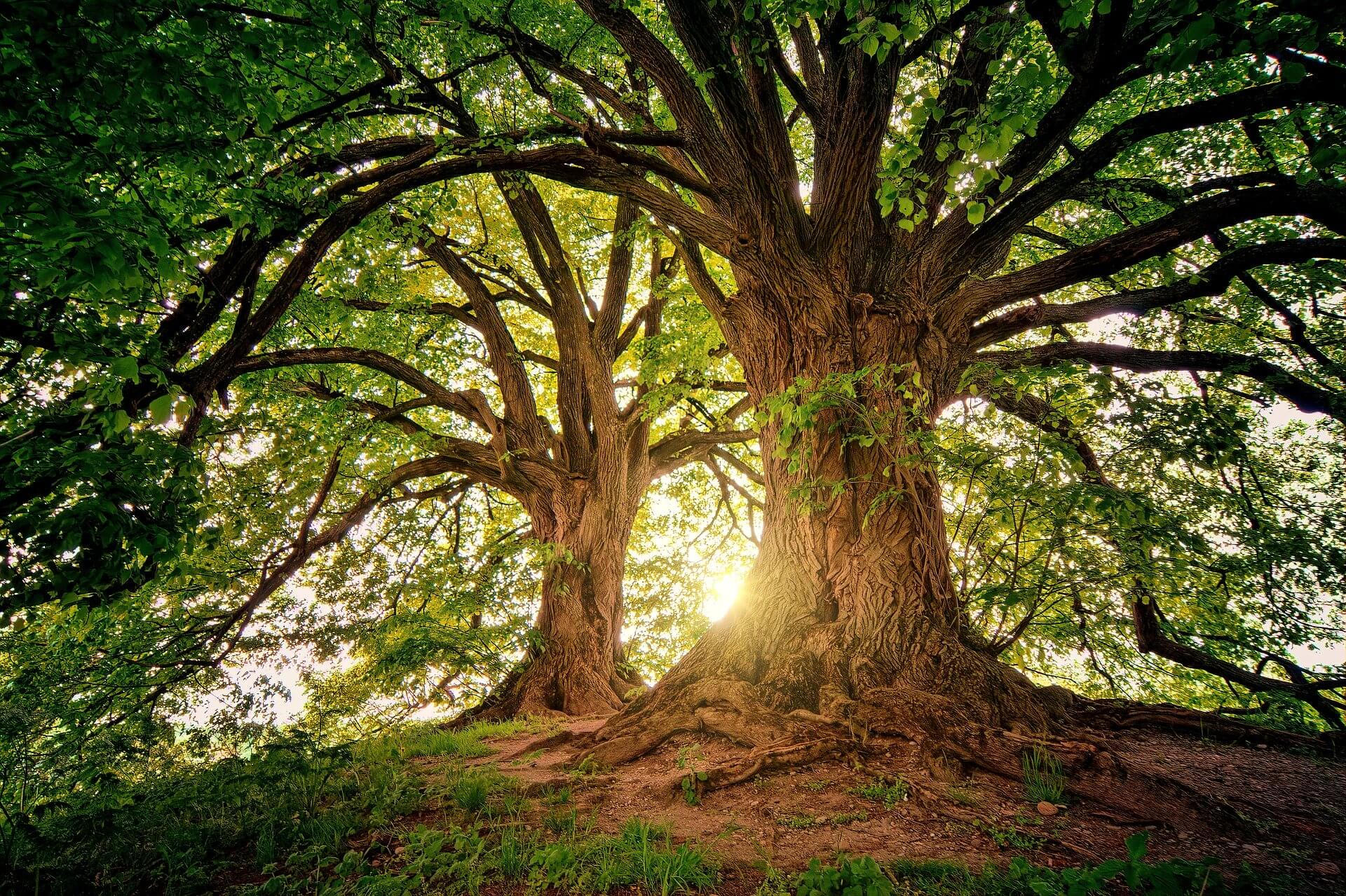
There’s a particular anxiety that comes with finding a crack in your wall and a large tree nearby. Your mind goes straight to the worst case. The roots are under the house. The foundations are shifting. Something expensive is about to happen. Sometimes that’s exactly right. Often it isn’t. Tree roots and foundations don’t always cause each other problems, but when they do, the earlier you catch it the better. Here’s what you actually need to know.
This post covers how tree roots and foundations interact, when the relationship becomes a problem, and what the realistic options are.
How Tree Roots and Foundations Actually Interact
The version most people picture is roots physically forcing their way through solid concrete like something from a nature documentary. That does happen in extreme cases, but it’s rarely the main story. The more common problem is quieter and slower.
It Starts With the Soil
Tree roots are always hunting for moisture. On clay soil, that search has a consequence that matters a lot to anyone with a house nearby. As roots pull water from the clay, the clay shrinks. Shrink the ground beneath a building’s foundations and those foundations start to move unevenly. That movement is subsidence, and it’s how most tree root and foundation problems actually develop.
It builds slowly. Often for years without anything showing at the surface. Dry summers are when it tends to become visible: trees working harder for water, clay contracting more than usual. Yorkshire has clay soil in abundance, which makes this directly relevant to a lot of properties around Leeds, Bradford, Harrogate, and Wakefield.
The Seasonal Pattern
Here’s something worth knowing when you’re trying to work out what’s causing a crack: tree-related subsidence follows the weather. Cracks that open up during a dry summer and partially close again once the rain returns are following soil moisture, not the age of the building. That cycle tends to repeat and worsen year on year. It’s one of the more reliable ways to tell tree roots and foundations apart from ordinary settlement.
Direct Pressure
On top of the moisture-related subsidence, larger root systems do exert physical pressure. Older, more established trees develop roots that are hard and dense over time. These push up paths and driveways over time, and in some cases work into drain pipes. A root that cracks a drain lets water escape into the surrounding soil, softening it, which creates another layer of movement risk beneath the foundations. One problem quietly becoming three.
How Far Roots Actually Reach
This is the part that catches people out more than anything else. The conventional wisdom about roots staying within the spread of the canopy is wrong. Tree roots can extend to more than three times the height and canopy width of the tree above. A mature oak that looks a safe distance from the house may have had a root system under the foundations for years. The tree you’re not worried about might be the one worth looking at. A proper assessment gives you a much clearer picture than eyeballing the canopy from the garden.
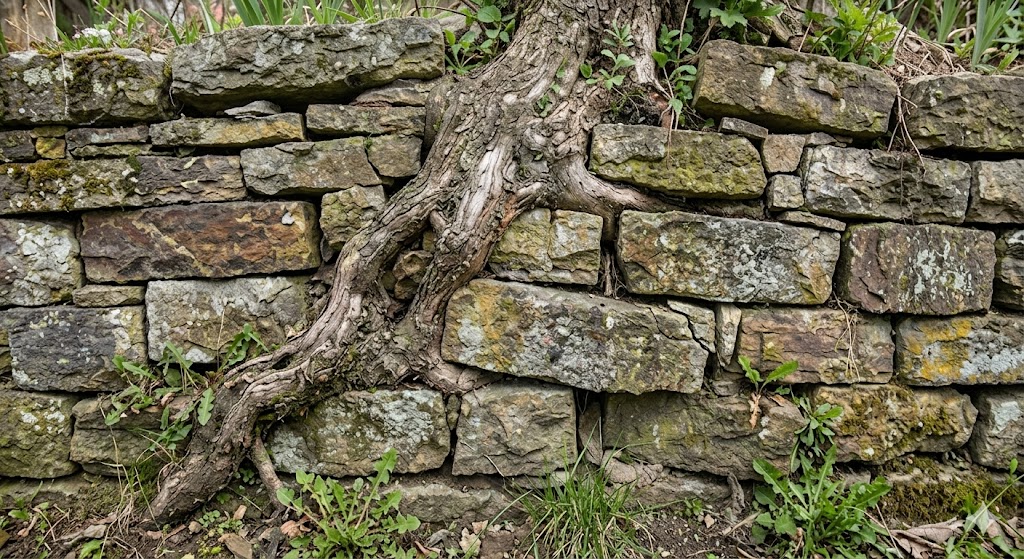
When Tree Roots and Foundations Become a Serious Problem
Most trees near buildings cause no damage. Worth saying that before anything else. The vast majority of mature trees growing close to houses are leaving the foundations entirely alone.
What changes that is when the wrong things combine. A big tree with a high water demand. Clay soil underneath. Shallow foundations. A property built before 1950. Get all of that together and the conditions are there for tree roots and foundations to start causing real problems. A persistently dry summer on top of that is usually when things stop being invisible and start showing up as cracks and sticking doors.
People often want to know which species is the problem. Oak, Willow, Poplar, Ash, Sycamore, and Plane come up most in subsidence cases. Willows are thirsty and spread aggressively. Oaks cause more foundation damage than you’d expect given how few grow in residential gardens. But the species is honestly secondary. A large established tree of almost any kind, growing close to an older property on clay, is worth keeping an eye on.
The Neighbour Problem
The tree causing the problem isn’t always yours. Roots from next door’s garden, or from a council-owned street tree, travel just as far under your house as anything growing in your own garden. If a neighbour’s tree is proven to have caused the damage, they can be held liable for the cost of repairs. Getting to that point takes professional reports and sometimes legal advice, which is why starting the conversation early matters. It’s a lot less expensive than letting it become a dispute.
Signs That Tree Roots and Foundations May Be Causing Problems
Diagonal cracks running from the corners of windows or doors, particularly those wider at the top, are the most commonly flagged sign. Doors and windows that have started sticking or no longer sit in their frames properly. Gaps appearing around skirting boards or window frames. A path or driveway that developed a ridge or lifted section. Drains that repeatedly block without an obvious cause.
None of these on their own definitively confirm that tree roots and foundations are the issue. All of them warrant a proper look, particularly if you’ve got mature trees nearby and the problems appear or worsen in dry weather.
What Can Actually Be Done
Crown Reduction
Crown reduction cuts the tree’s water demand. Less canopy, less moisture pulled from the soil beneath the foundations. It’s not an overnight fix, but it’s often the right starting point when the tree is worth keeping and things haven’t reached a critical stage. Our tree surgery service covers this across Leeds, Bradford, Harrogate, and Wakefield.
Root Barriers
Root barriers redirect growth away from vulnerable structures. More useful during construction or landscaping than as a retrofit, but worth discussing with an arborist before ruling it out.
Tree Removal
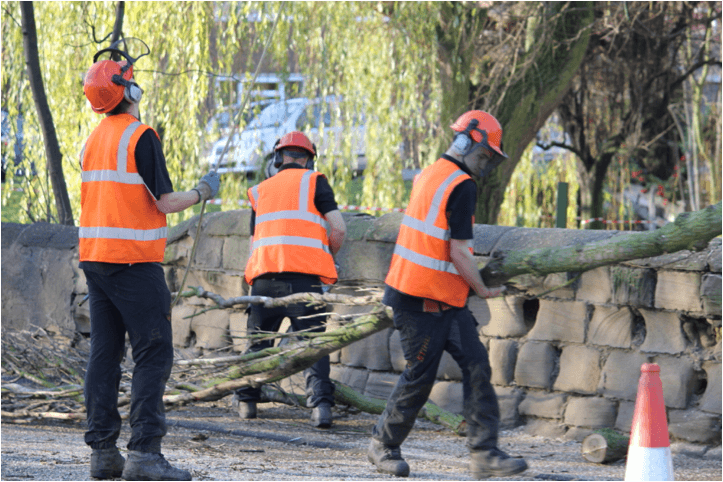
Where the damage is significant, the tree isn’t protected, and the situation is only going to deteriorate, removal is sometimes the right answer. We approach this honestly: we’ll tell you whether we think removal is warranted based on an assessment of the situation, not because it’s the larger job. Our team handles tree felling and dismantling across all four areas we cover.
Stump Removal
Worth factoring in from the start. When a tree comes down, the root system doesn’t disappear with it. Stump grinding removes the visible stump and breaks down the upper root system. Our stump removal service covers this as part of a removal or as a standalone job.
Tree Preservation Orders and Foundations
If the tree causing the problem has a Tree Preservation Order on it, or sits in a Conservation Area, you can’t just take it down. That applies even if it’s actively damaging your property. Permission from the local planning authority is required first, and skipping that step is a criminal offence, not a technicality.
At Treesaw we check for TPOs before any work starts on every job. We can tell you what’s permitted, what needs applying for, and what your realistic options are given the tree’s status. The GOV.UK guidance on Tree Preservation Orders is worth a read if you want to get your head around the framework before speaking to anyone.
Getting a Proper Assessment
Subsidence signs plus mature trees nearby: get someone out to look at it. Don’t wait to see if it settles down, because tree-related foundation movement tends to do the opposite.
A structural engineer can tell you whether the cracking pattern is consistent with root-related movement. An arborist can look at the trees and tell you what’s actually going on and what can be done about it. Between the two you get a clear picture rather than guesswork.
We’re based in Yeadon and cover Leeds, Bradford, Harrogate, and Wakefield. Free estimates include a look at any trees you’re concerned about. We hold AAAC status and will give you a straight answer on what we find.
0113 239 1271 / [email protected] / get in touch here
Monday to Saturday, 8am to 6pm. Emergency line: 07754 733124.