

The Best Time to Prune Olive Trees in the UK
It is one of the most Googled questions in UK gardening: when is the best time to prune olive trees? And it is a question that has a genuinely complicated answer. At least for anyone growing Olive Trees in northern England.
Type the question into Google and you will quickly find yourself reading conflicting advice. Mediterranean gardening guides will tell you to prune in late winter or early spring. UK garden centres may suggest autumn. Some sources recommend avoiding pruning altogether unless absolutely necessary. The confusion is understandable; most of the widely available guidance on olive tree pruning has been written for climates that barely relate to West Yorkshire in February.
At Treesaw, we maintain olive trees across Leeds. Pruning at the right point in the calendar year is one of the most important factors. It separates a healthy, well-structured olive tree from one that is struggling with disease, dieback, or poor form. This article explains the why behind the when, so you can make properly informed decisions about your tree.
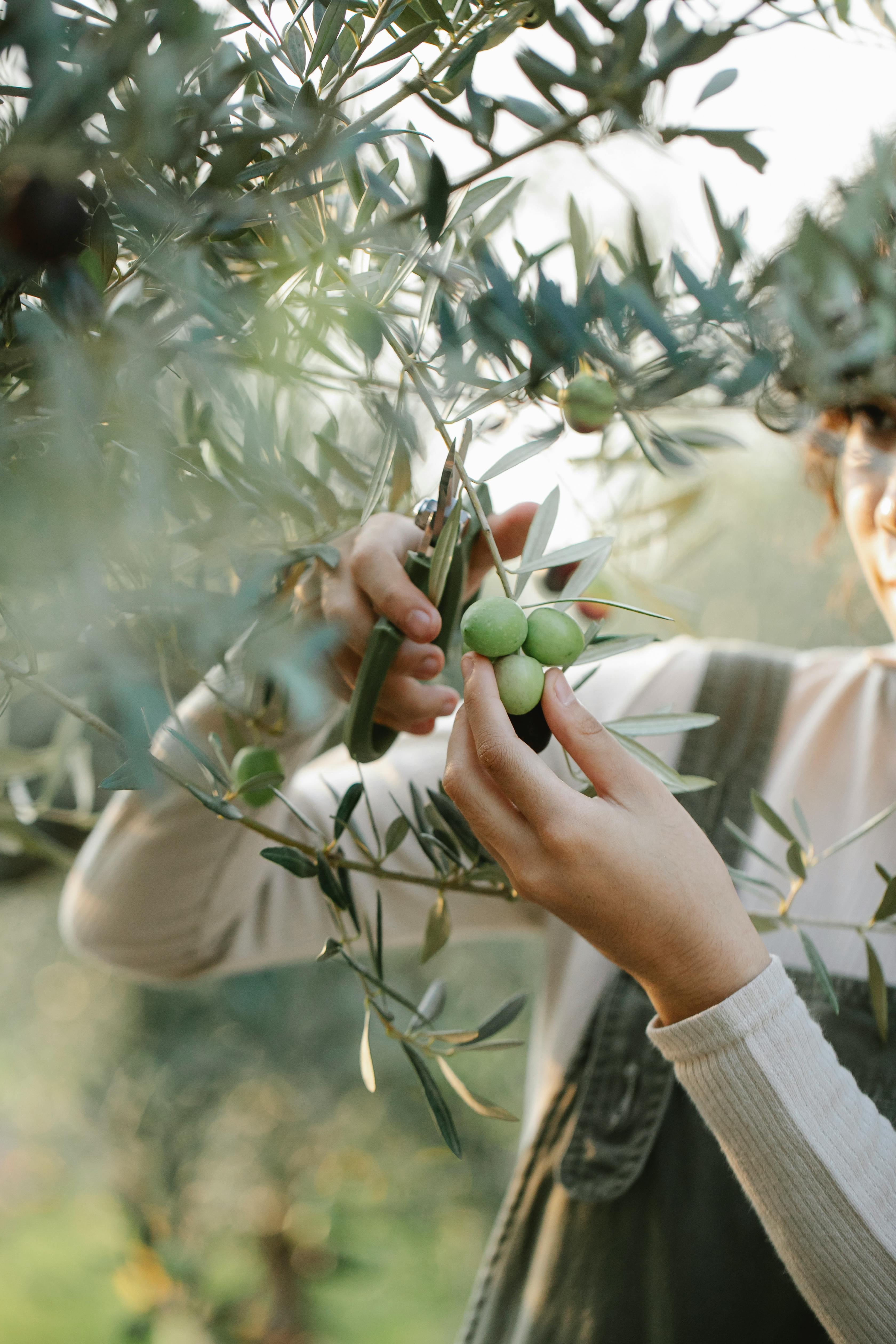
Why the Best Time to Prune Olive Trees Differs in the UK
To understand why timing is important, it helps to understand what a pruning cut actually does to a tree. When you remove a branch, you create an open wound. The tree responds by producing callous tissue. This is a ring of new growth that gradually closes over the wound, sealing it against moisture and pathogens. The speed of healing depends on how actively the tree is growing at the time the cut is made.
In the Mediterranean; where temperatures are mild and winters are dry, a late winter prune creates wounds that begin callusing within a matter of weeks. The window between cutting and active growth is short. The dry winter air means the open wound is not sitting in persistently damp conditions.
In Leeds, that same late winter prune produces wounds that may sit open for two or three months in poor conditions. That extended period of vulnerability is significant. Fungal pathogens, like Verticillium wilt and Colletotrichum acutatum, can enter through fresh pruning wounds and establish themselves before the tree has any meaningful capacity to respond.
This is not a theoretical risk. We have assessed olive trees in Leeds; where well-intentioned winter pruning has directly contributed to significant dieback the following season. The trees were pruned correctly (good clean cuts, appropriate branch removal), but the timing exposed them to conditions they were not equipped to handle.
The Best Time to Prune Olive Trees in the UK: A Month-by-Month Guide
It is more useful to think about the pruning calendar in terms of what different types of work are appropriate at different times of year. The type of pruning being undertaken, whether that is a full crown clean, a crown reduction, formative work on a young tree, or simply the removal of epicormic shoots, does influence when it is best carried out.
January to March: The Period to Avoid for Structural Pruning
For most structural pruning work: crown reductions, crown cleans, formative pruning and pollarding, the winter months are best avoided in the UK. Average temperatures in Leeds during this period sit at or below 5 degrees Celsius, with high rainfall. The combination of cold and damp is the worst possible environment for an open pruning wound.
There is also the question of frost. A hard frost following a recent pruning session can cause significant damage to the freshly cut tissue, dramatically increasing the risk of dieback into the branch. Olive trees are more cold-hardy than many people realise; established trees can generally tolerate temperatures down to around minus 7 to minus 10 degrees Celsius. But their tolerance drops considerably when they are carrying fresh pruning wounds.
April: A Transitional Month — Proceed With Caution
April in West Yorkshire is unpredictable. We often see warm spells that encourage early growth, followed by sharp overnight frosts well into the second half of the month. The Met Office’s historical climate data for Leeds shows that ground frosts have been recorded in every month up to and including May in recent decades, albeit with decreasing frequency as the month progresses.
Light tidying work in April is generally acceptable, removing epicormic shoots, small dead wood, and minor crossing branches where the cut diameter is modest. Heavy structural work is still best deferred until the frost risk has genuinely passed.
May to Early June: The Best Time to Prune Olive Trees in Leeds
This is the optimal window for the majority of pruning work on olive trees in the Leeds area, and it is the period when Treesaw carries out most of its structural olive tree work. By mid to late May, the risk of significant frost is largely behind us, temperatures are rising consistently, and crucially the olive tree is in active growth.
Pruning during active growth means that the tree’s callusing response is rapid. Wounds that might take four months to begin closing in February can show meaningful callous development within four to six weeks when cuts are made in late May. The tree is also producing its natural chemical defences at maximum efficiency, which helps it resist the pathogen threats that pruning wounds create.
The full range of pruning operations; crown cleans, crown thinning, crown reductions, formative pruning, crown lifting, pollarding, and epicormic growth removal, can all be carried out effectively in this window. If you are planning any significant work on your olive tree, this is the time to schedule it.
Mid June to August: Ongoing Maintenance Still Appropriate
Through the main growing season, light maintenance work remains appropriate. Epicormic shoot removal in particular benefits from being addressed throughout the summer, these shoots grow fast, and tackling them in two or three passes through the season is often more effective than a single annual clear-out.
Major structural work is best avoided through the height of summer. Removing significant amounts of foliage in July or August can stress the tree at the point when it is trying to photosynthesize most actively, and it leaves less time for wound healing before the autumn decline in growth. Not every tree follows this pattern though. Plum trees are the reverse; mid-summer is precisely when they should be pruned because silver leaf disease is a higher risk in Winter. See out guide to Plum tree pruning in the UK for why the timing flips completely.
September to December: Wind Down for the Year
As temperatures drop and the tree moves towards dormancy, pruning options become increasingly limited. The tree’s growth rate is slowing, which means wound healing is slower. Autumn pruning can also stimulate a flush of new soft growth that, if it appears late enough in the season, may not have time to harden off before the first frosts.
In practical terms, light tidying can still be carried out in early September, but October onwards is generally a period to leave the tree alone. If you notice dead wood or damaged branches through the autumn and winter, make a note of them for the spring, rather then reaching for the loppers.

Does the Type of Pruning Affect the Best Time to Prune Olive Trees?
The type of work being carried out does introduce some nuance to the timing question. Here is how the key operations map to the seasonal calendar.
Crown Clean: Best Time Late Spring to Early Summer
A crown clean; the removal of dead, dying, diseased, and crossing branches, is best carried out in late spring when the tree is in full leaf. At this point, dead and dying wood is much easier to identify accurately. A branch that looks merely dormant in February is clearly dead by May. Waiting until the tree has leafed up prevents the common mistake of removing wood that was in fact alive but slow to break dormancy.
Crown Thin: Best Time May to June
Crown thinning; selectively removing branches from within the canopy to improve light and air flow, requires the tree to be in leaf so that the arborist can assess canopy density accurately. May and June give you the ideal combination: the tree is in full growth, the light conditions allow a proper assessment of where the canopy is overcrowded, and any wounds created will heal efficiently through the remainder of the growing season.
Crown Reduce and Shape: Best Time Late May
Crown reductions produce the largest wounds of any routine pruning operation and therefore benefit most from being carried out when the tree’s capacity for wound closure is at its peak. Late May is our preferred window at Treesaw for this reason. The tree has fully leafed up, growth is vigorous, and there is a full growing season ahead for the wounds to begin callusing before the following winter.
Formative Pruning: Best Time Late Spring on Young Trees
For newly planted or young olive trees, formative pruning: the work carried out to establish the tree’s long-term structure, should ideally be done in late spring once the tree has settled into its new position. Trees that have just been transplanted are already under a degree of stress, and pruning during this establishment period needs to be managed carefully to avoid compounding that stress. Late spring gives the tree the best conditions to recover from both the transplant and any formative cuts simultaneously.
Pollarding: Best Time Late Spring, With Careful Consideration
Pollarding: cutting the tree back hard to a framework of main stems to control size or renovate an old specimen, produces the most severe wounds of any pruning technique and is the operation where timing has the greatest consequences. We would not consider pollarding an olive tree outside of the late spring window. The large surface area of exposed wood created by a pollard needs every advantage the tree can muster in terms of growth response and wound sealing.
Crown Lift and Epicormic Removal: Flexible Across the Growing Season
Crown lifting means removing the lower branches to raise the canopy height, and the removal of epicormic growth from the trunk and main branches are the most timing-flexible of the common olive tree operations. Both involve relatively modest wounds, and both can be carried out effectively at any point between May and August. For epicormic growth in particular, addressing it in multiple passes through the growing season tends to produce better results than a single annual visit.
Does the Best Time to Prune Olive Trees Change for Potted Specimens?
A significant proportion of the olive trees we encounter in Leeds gardens are grown in containers rather than planted in the ground. Potted olive trees are extremely popular, they are easy to position and reposition, they can be brought under cover in severe winters, and many of the most attractive ornamental varieties are specifically sold for container growing.
The timing principles remain broadly the same for potted trees, but there are a couple of additional considerations. Container-grown olive trees are generally more vulnerable to cold than their in-ground counterparts, because the root system has no ground insulation and the compost in the pot can freeze solid in a hard winter. If your potted olive lives outdoors year-round, the late spring pruning window is even more important, the tree may be recovering from winter stress when the growing season begins, and pruning before it has fully bounced back is unwise.
For potted trees that are brought under cover during winter, into a cool greenhouse, garage, or porch, the timing question becomes slightly more complicated. Trees kept in heated or semi-heated conditions through winter may break dormancy earlier than outdoor specimens, and pruning timing should follow the tree’s actual growth stage rather than the calendar date. An olive that is actively producing new shoots in March because it has been kept in a warm conservatory can be pruned earlier than one that has been outside all winter.
Signs That Your Olive Tree Needs Pruning Regardless of the Time of Year
Timing ideally governs when you schedule routine maintenance. But there are circumstances where intervention cannot wait for the optimal window, and recognising these is important.
Storm damage is the most obvious. If a significant branch has split or been torn from the tree, leaving a ragged wound, that wound should be cleaned up by a qualified arborist as soon as possible regardless of the time of year. A clean, correctly made cut will always heal better than a torn wound left to deteriorate through the winter.
Visible disease is another. If you notice unusual dieback, cankers on the bark, or signs of fungal infection, do not wait until May to address it. Early intervention on disease can prevent it from spreading through the rest of the tree. A professional assessment at any time of year is preferable to watching a problem develop through winter because the calendar doesn’t feel right.
A branch that presents an immediate safety hazard, one that is hanging over a roof, a path, or a neighbouring property, also warrants prompt attention. In these situations, the timing guidance applies to the non-urgent work that can be completed at the same visit, but the hazardous element should be dealt with as soon as it is identified.
What Climate Change Might Mean for the Best Time to Prune Olive Trees in the UK
This is perhaps the most interesting and least-discussed aspect of olive tree care in the UK, and one worth raising because the picture is genuinely changing. The UK’s climate has warmed measurably over the past thirty years. The Met Office’s UK Climate Projections indicate a clear trend towards milder winters and earlier springs.
For olive tree owners, this has two implications. First, the late-spring pruning window may gradually shift earlier; April pruning may become more reliably appropriate in the coming decades as the frost risk in West Yorkshire recedes. Second, the range of olive varieties that can be successfully grown outdoors in the UK year-round is expanding; with more cold-sensitive cultivars now surviving Leeds winters that would have killed them twenty years ago.
That said, the UK climate remains fundamentally wetter than the Mediterranean. The fungal pathogen risk associated with pruning in cold, damp conditions will not disappear as average temperatures rise. The wet-wound problem is as much about moisture as it is about cold; and northern England’s rainfall patterns are not expected to decrease meaningfully. The late spring window will remain the safest bet for structural work on olive trees in Leeds.
So: What Is the Best Time to Prune Olive Trees in the UK?
The honest answer is late May to early June for any structural or significant pruning work; with lighter maintenance possible throughout the main growing season from May to August. The winter months (November through to April) carry meaningful risk for anything beyond very light tidying.
Getting the timing right is one half of the equation. The other half is having the work carried out by someone who understands olive trees in a UK climate. Do they understand: the appropriate cuts for different operations? The species-specific approach to crown thinning and epicormic management? Can they accurately assess the tree’s current health and structure before deciding what work is actually needed. At Treesaw, we can.
If the olive tree in your Leeds garden is due for maintenance. Or you are unsure about its current condition, Treesaw are happy to carry out a free assessment. We work across Leeds, Harrogate, Wakefield and Bradford. We are typically fully booked for the late spring pruning window well in advance; so if you are thinking about getting work done this year, now is a good time to get in touch.
Contact us today for a free, no-obligation olive tree assessment.
Based in Leeds, serving all of West Yorkshire including Harrogate, Wakefield, Bradford and surrounding areas.