

Tree Root Damage | Signs, Causes and Solutions
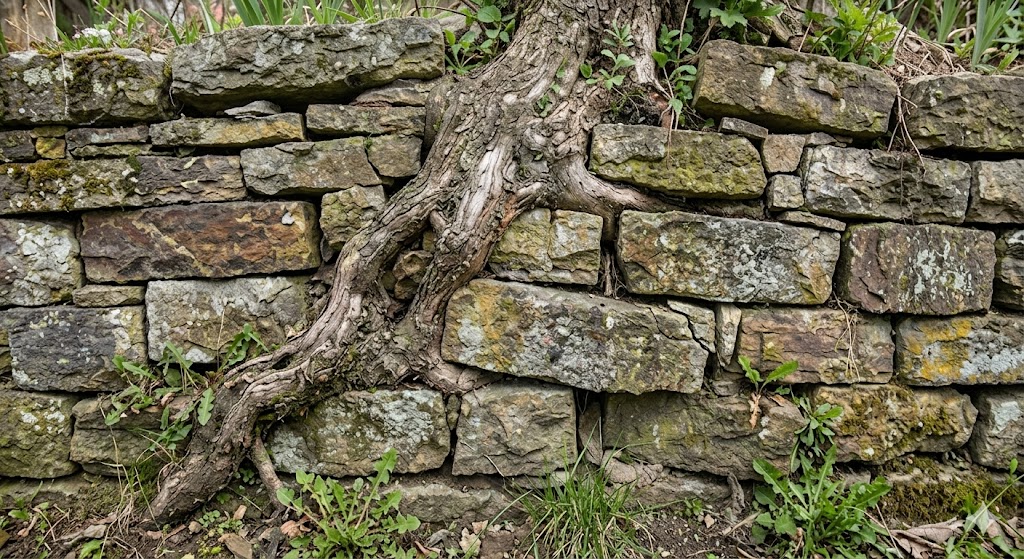
Nobody really pays attention to their tree roots until it’s too late to fix. A crack appears in the wall. A drain starts backing up. A path that was perfectly level two years ago now has a ridge running across it that you keep catching your foot on. Tree root damage is one of those problems that get worse if no attention is paid, it’s best to take care of these things as soon as a new problem arises.
How Tree Roots Actually Cause Damage
There’s a version of this in people’s heads where roots are pushing through concrete like something out of a disaster film. That does happen. But it’s not usually the main problem, and it’s not how most tree root damage to buildings actually works.
It’s Usually About Moisture, Not Brute Force
Most tree root damage doesn’t look like what people picture. Roots aren’t shouldering their way through solid concrete. They’re doing something slower: drying out the ground underneath your foundations. Clay soil is what makes this a real problem. Pull enough moisture from clay and it shrinks. Shrink the ground under a building and the foundations shift with it. Shift the foundations and things start to move upstairs too: cracks in the plaster, doors catching on frames, windows that no longer sit quite right.
Clay is everywhere across Yorkshire, making the problem common for properties around Leeds, Bradford, Harrogate, and Wakefield. A dry summer tends to be when it gets noticeable. Trees are working harder for moisture, taking more from the soil, and the clay is doing more of its shrinking and swelling. That cycle, repeated over enough seasons is is making the problem bigger
Direct Pressure Is a Problem Too
Larger root systems do also exert physical pressure on whatever’s in their way. Driveways and paths get pushed upward as roots grow beneath them. That’s usually cosmetic until it isn’t. Below ground, tree root damage to drains is common and often goes unnoticed for years: a root works into a drain pipe, cracks it, and the water that then leaks out softens the surrounding soil, which creates its own subsidence risk on top of everything else.
How Far Roots Travel
This is the part that surprises people most. Tree roots can spread to more than three times the width of the canopy above, and sometimes considerably further. A tree that looks like it’s a safe distance from the house very often isn’t. The root system may have been underneath the building for years before anything visible appears at the surface.

What Tree Root Damage Actually Looks Like
Tree root damage doesn’t tend to introduce itself. It turns up as something small you notice once, forget about, and then start seeing everywhere.
Cracks in walls are the obvious one. Not every crack is serious, and not every crack is down to roots. But diagonal ones running from the corners of windows or doors, wider at the top than the bottom, are worth taking seriously. The pattern to watch for is cracks that open up in a dry summer and partially close again when the wet weather returns. That seasonal movement is a fairly reliable sign of soil moisture being the cause rather than ordinary settlement.
Doors and windows sticking. A door that’s always been fine suddenly catches on the frame. A window that used to close cleanly now doesn’t quite sit right. Could be the house settling. Could be the ground moving beneath the foundations. Easy to dismiss the first time.
Paths and driveways lifting. A ridge across the driveway that wasn’t there last year, or a patio slab with one edge raised. Roots growing underneath and pushing up. Starts small, usually gets worse.
Drains blocking repeatedly. If the same drain keeps causing problems with no obvious explanation, roots may have worked their way into the pipe. It’s more common than people realise and tends to go unnoticed until something fails more dramatically.
Gaps around windows or skirting. New gaps where things used to fit cleanly. The kind of thing you notice when you’re decorating and wonder how long it’s been there.
Which Trees Tend to Cause the Most Problems
Oak, Willow, Sycamore, Ash, Plane, and Poplar are the ones that come up most often in subsidence surveys. Willows have a reputation for a reason: they’re thirsty, they spread widely, and they don’t stop. Oaks are slower but they get large, and a large oak eventually has a root system to match. None of that means a different species automatically gets a clean bill of health.
The real risk comes from a combination of things: a big tree, close to the building, on clay soil, next to a property with shallow foundations. Put all four of those together and you’ve got a problem waiting to happen regardless of what’s written on the tree label. Pre-1950s properties are the most vulnerable because the foundations simply don’t go as deep. If you’ve got an older house, mature trees in the garden, and you’re sitting on Yorkshire clay, that’s the combination worth paying attention to.
Tree Preservation Orders and Tree Root Damage
There’s a few legal implications that need to be considered, iIf the tree causing the problem is covered by a Tree Preservation Order (TPO), or sits within a Conservation Area, you can’t just take it down. You need permission from the local planning authority first, and that applies even if the tree is actively damaging your property. Disregarding this can have some complications such as illegal authorities getting involved.
At Treesaw, we ensure that all of our work follows TPO and is permitted. We can advise on what’s allowed, what applications need to be made, and what options are realistic given the status of the tree.
What the Options Are
Crown reduction
If the tree is worth keeping and things haven’t got critical yet, bringing the crown down in size can help. Less canopy above means less water demand below, which means less moisture being pulled from the soil under your foundations. It’s not a quick fix, but it’s the right one in a fair number of situations.
Root barriers
These redirect root growth away from structures. Honestly more useful when you’re building or landscaping than as a solution to an existing problem. However, it’s better to talk with an arborist first if you’re weighing up options.
Tree removal
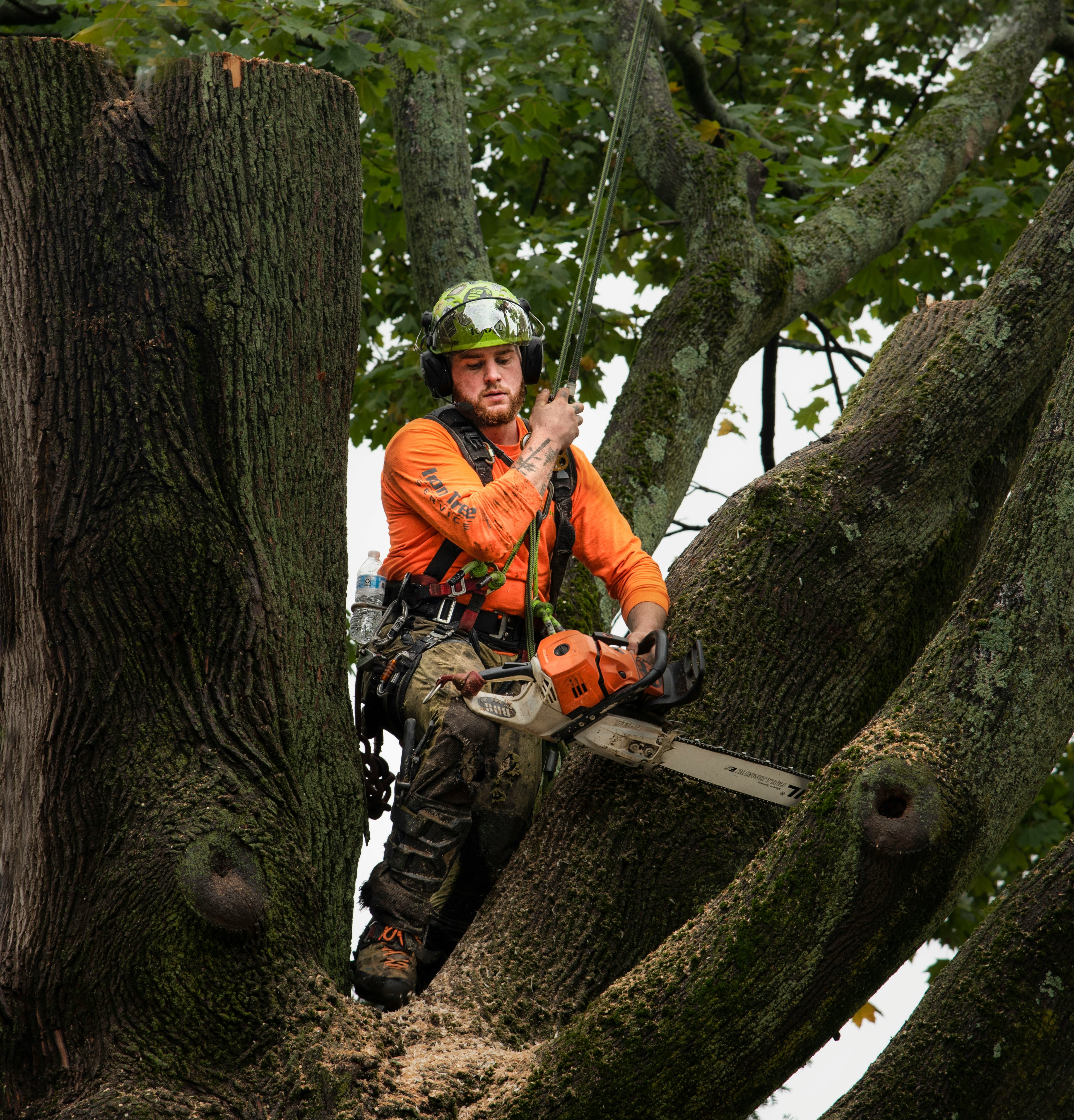
Sometimes it’s the only answer. If the damage is serious, the tree isn’t protected, and the risk isn’t going away, it needs to come down. We’ll tell you straight whether we think that’s warranted rather than just recommending it because it’s the bigger job. Our team covers Leeds, Bradford, Harrogate, and Wakefield.
Stump removal
People forget this part. Take a tree down and the stump and root system are still there. Stump grinding deals with the visible stump and breaks down the upper root system, which is usually enough. We can do this as part of a removal or as a standalone job.
Getting It Properly Assessed
If you’re seeing signs that look like subsidence, get it looked at properly rather than waiting to see if it gets worse. A structural engineer can tell you whether the damage pattern is consistent with tree root movement. An arborist can assess the tree and tell you what’s realistic in terms of management or removal.
At Treesaw we offer free estimates and can assess trees as part of that visit. We hold Arboricultural Association Approved Contractor (AAAC) status and cover Leeds, Bradford, Harrogate, and Wakefield. If you’ve got a tree you’re concerned about, give us a call and we’ll take a look.
0113 239 1271 / [email protected] / get in touch here
Monday to Saturday, 8am to 6pm. Emergency line: 07754 733124.